If you are thinking about buying a small multifamily property in Hermantown, you are probably trying to balance two goals at once: finding steady income now and protecting resale value later. That can feel tricky in a city where housing is mostly owner-occupied and not every residential parcel works the same way for duplexes, triplexes, or fourplexes. The good news is that a smart investment here usually comes down to a few local basics: zoning, legal use, parking, utilities, and realistic rent and tax planning. Let’s dive in.
Why Hermantown Stands Out
Hermantown is not a fast-growth market built around large apartment inventory. It is a smaller city with 10,110 residents as of July 1, 2025, and about 73.1% of housing units are owner-occupied.
That matters if you are looking at small multifamily homes. In a market with a strong owner-occupied base, properties with two to four units can appeal to both investors and owner-occupants, depending on layout, condition, and legal status.
The city also appears relatively stable rather than overheated. Population growth from April 2020 to July 1, 2025 was 0.6%, and the city’s long-range planning expects only modest household growth over time.
At the same time, Hermantown’s 2045 Comprehensive Plan update points to a need for more housing options and affordability because much of the current housing stock is single-family detached. That does not guarantee investment performance, but it does suggest that well-positioned small multifamily properties fit an identified local housing need.
Small Multifamily Types in Hermantown
Before you run numbers, it helps to know that not all small multifamily properties are treated the same under Hermantown zoning. Unit count, zoning district, and permit path all matter.
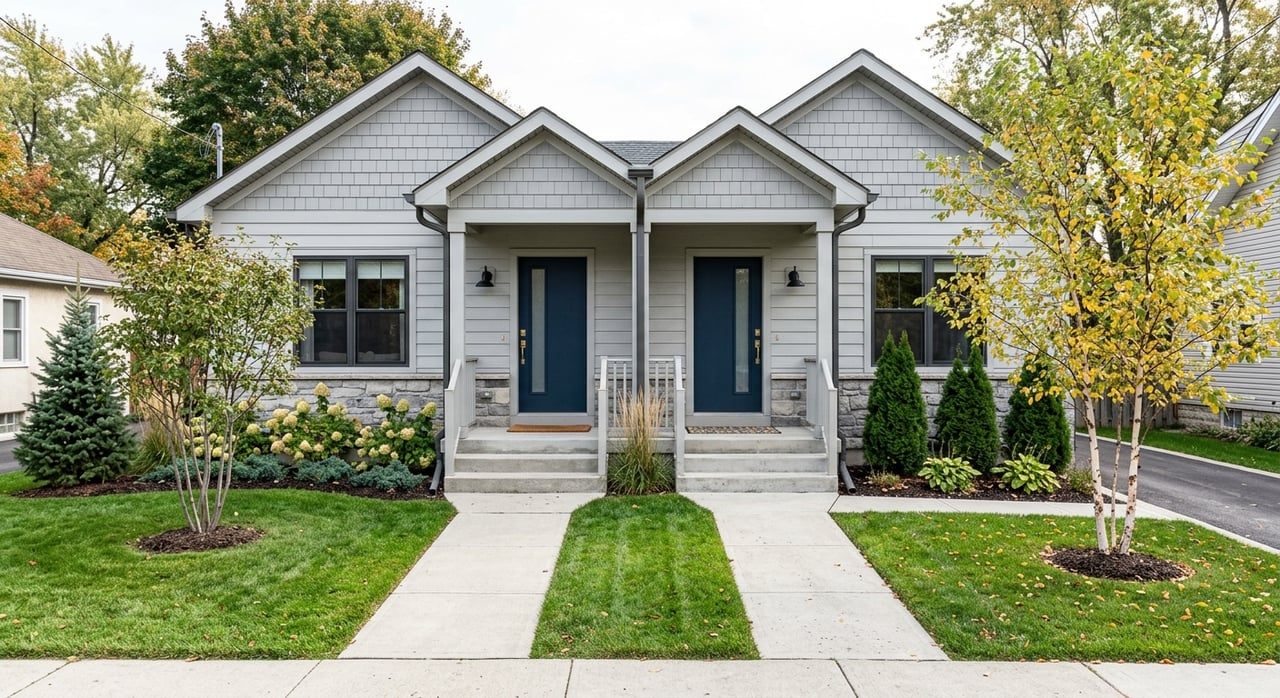
Two-family homes and duplexes
Hermantown’s zoning code distinguishes between two-family dwellings and duplexes. Two-family dwellings are permitted in S-1 and R-1 districts, while duplexes in R-2 and R-3 are special-use permit items.
That means you should not assume two properties with similar layouts have the same approval path. A building’s legal use and district designation can affect both your purchase decision and your future resale options.
Triplexes and fourplexes
If you are shopping for three- and four-unit properties, R-3a is especially important. That district is the city’s multiple-family residential district and explicitly covers triplexes, fourplexes, and apartments over four units through special use permit review.
For buyers, this means due diligence is more than a quick online search. You want to confirm the current zoning, whether the use is conforming, and whether any special approvals are tied to the property.
Older or nonconforming properties
Some small multifamily opportunities may be older homes, converted structures, or properties that have changed over time. Hermantown’s code separately addresses nonconforming uses and planned unit development, so a property should be checked for legal status instead of treated as automatically straightforward.
This is especially important when you are counting on future refinancing, resale, or unit improvements. A property that looks attractive on paper can become more complicated if its use history is unclear.
Zoning Should Be Your First Filter
In Hermantown, zoning is not a minor detail. It should be one of the first things you verify before you spend much time on cash flow projections or renovation plans.
A parcel may look ideal because of price, layout, or location, but that does not mean it fits your intended use. Small multifamily opportunities here are shaped by district rules and permit pathways rather than being interchangeable across all residential lots.
Questions to answer early
When you evaluate a property, start with a short checklist:
- What is the current zoning district?
- Is the existing use legally conforming?
- Was a special use permit required or issued?
- If you plan to change unit count or layout, is that allowed?
- Are there any site limitations that affect compliance?
These answers can influence financing, renovation scope, operating costs, and resale appeal. They also help you avoid buying a property that only works if several uncertain approvals fall into place.
Parking and Utilities Can Change the Deal
A strong-looking rent roll does not always tell the whole story. In Hermantown, site fit matters because city rules can affect how practical a small multifamily property is to own and operate.
Hermantown requires 2 off-street parking spaces per dwelling unit. For a duplex, that means four spaces. For a fourplex, that means eight.
On a tight lot, parking can become a real constraint. Even if the building itself seems workable, the site may be less functional if parking is awkward, limited, or expensive to reconfigure.
Sewer and water matter too
R-3a developments must be served by public sewer and water. If you are considering a higher-density property or a property with future unit-count goals, utility availability should be part of your review from the start.
This can affect both acquisition and resale. Buyers tend to feel more confident when site logistics are clear and the property cleanly fits city requirements.
How to Think About Rent Benchmarks
If you are estimating income, local rent context helps keep expectations grounded. Census QuickFacts shows a median gross rent in Hermantown of $1,463.
You can also use the FY 2026 Duluth MSA Fair Market Rents as a general benchmark. Those figures are $978 for a one-bedroom, $1,232 for a two-bedroom, $1,689 for a three-bedroom, and $2,067 for a four-bedroom unit.
HUD describes Fair Market Rents as gross rent estimates that include shelter rent plus tenant-paid utilities, excluding telephone, cable or satellite, and internet. That is useful because it reminds you to compare rents on a like-for-like basis.
Use benchmarks carefully
Rent benchmarks are a starting point, not a promise. Actual rent potential can vary based on unit size, condition, utility setup, parking, and how well the property fits what renters in the area are seeking.
In a market like Hermantown, conservative assumptions usually serve small investors better than optimistic ones. If the numbers still make sense with realistic rents and normal expenses, that is a healthier sign.
Property Taxes Deserve a Close Look
For small multifamily investing in Minnesota, property taxes are not something you want to estimate casually. The state’s property tax system is based on value and classification.
The county assessor determines estimated market value and classification. Then taxable market value is multiplied by the classification rate to determine tax capacity, and local tax rates and other items are applied.
For taxes payable in 2026, the class rate is 1.25% for apartment property with four or more units and 1.25% for nonhomestead residential property with one to three units. That makes classification an important part of your underwriting.
Owner-occupant buyers should note homestead rules
If you plan to live in one unit, Minnesota homestead classification may be relevant. It requires ownership, primary-residence occupancy, and Minnesota residency, and the application is due to the county assessor by December 31 for taxes payable the next year.
For house hackers and live-in landlords, that is one more reason to plan ahead early in the purchase process. Occupancy strategy can affect how you evaluate overall costs.
A Practical Buying Framework
Small multifamily investing often works best when you keep the process simple and local. In Hermantown, a practical framework can help you avoid expensive surprises.
1. Confirm legal use
Start by verifying the parcel’s zoning and current legal use. This is the foundation for everything else.
2. Match the property to your unit goal
Make sure the site actually supports the number of units you want to own or maintain. Parking requirements and utility service can make a big difference.
3. Underwrite with realistic rent assumptions
Use local median rent context and Fair Market Rent benchmarks as reference points, then adjust for the property’s actual condition and setup. Avoid building your plan around best-case rents.
4. Review tax classification early
Make sure your estimated carrying costs reflect the likely property classification. If you plan to owner-occupy, understand homestead timing and requirements.
5. Think about resale from day one
The best small multifamily investments are not only buyable. They are also easy to explain and attractive to the next buyer.
Resale Matters More Than Many Investors Think
In Hermantown, your exit strategy deserves as much attention as your entry price. Because the city is largely owner-occupied and growth is modest, resale demand may come from a mix of local investors and owner-occupant buyers.
That is why legal status, parking, and utility fit matter so much. A property that is easy to understand and clearly aligned with city rules often has a cleaner resale story.
The city’s long-range plan also signals interest in a broader range of housing types and affordability. That can support demand for well-located small multifamily homes, but the strongest resale cases will still be the ones with clear documentation and practical site function.
Who Small Multifamily May Fit Best
Small multifamily in Hermantown can make sense for a few different buyer types. The right fit depends on your goals, time horizon, and comfort level with property operations.
It may be a good match if you are:
- An owner-occupant who wants to live in one unit and offset costs with rent
- A local investor looking for a smaller, more manageable property type
- A buyer who values stable markets over rapid speculation
- Someone willing to do careful due diligence before making an offer
It may be less appealing if you want a plug-and-play investment without much verification work. In Hermantown, the details matter, and they matter early.
If you are weighing a duplex, triplex, or fourplex in Hermantown, it helps to have a local guide who can keep the process practical and focused. From zoning questions to resale thinking, the right advice can save you time and help you make a more confident decision. If you are ready to talk through your options, connect with Michelle Ryan for a consultation.
FAQs
What should you check before buying a duplex in Hermantown?
- Verify the zoning district, confirm the property’s legal use, and review whether parking and site layout meet city requirements.
How many parking spaces does a small multifamily property need in Hermantown?
- Hermantown requires 2 off-street parking spaces per dwelling unit.
Where are triplexes and fourplexes typically addressed in Hermantown zoning?
- Hermantown’s R-3a district is the city’s multiple-family residential district and explicitly addresses triplexes, fourplexes, and larger apartment properties through special use permit review.
What rent benchmarks can you use for Hermantown multifamily investing?
- Useful reference points include Hermantown’s median gross rent of $1,463 and FY 2026 Duluth MSA Fair Market Rents of $978 for a one-bedroom, $1,232 for a two-bedroom, $1,689 for a three-bedroom, and $2,067 for a four-bedroom unit.
How are small multifamily property taxes classified in Minnesota?
- For taxes payable in 2026, the class rate is 1.25% for apartment property with four or more units and 1.25% for nonhomestead residential property with one to three units.