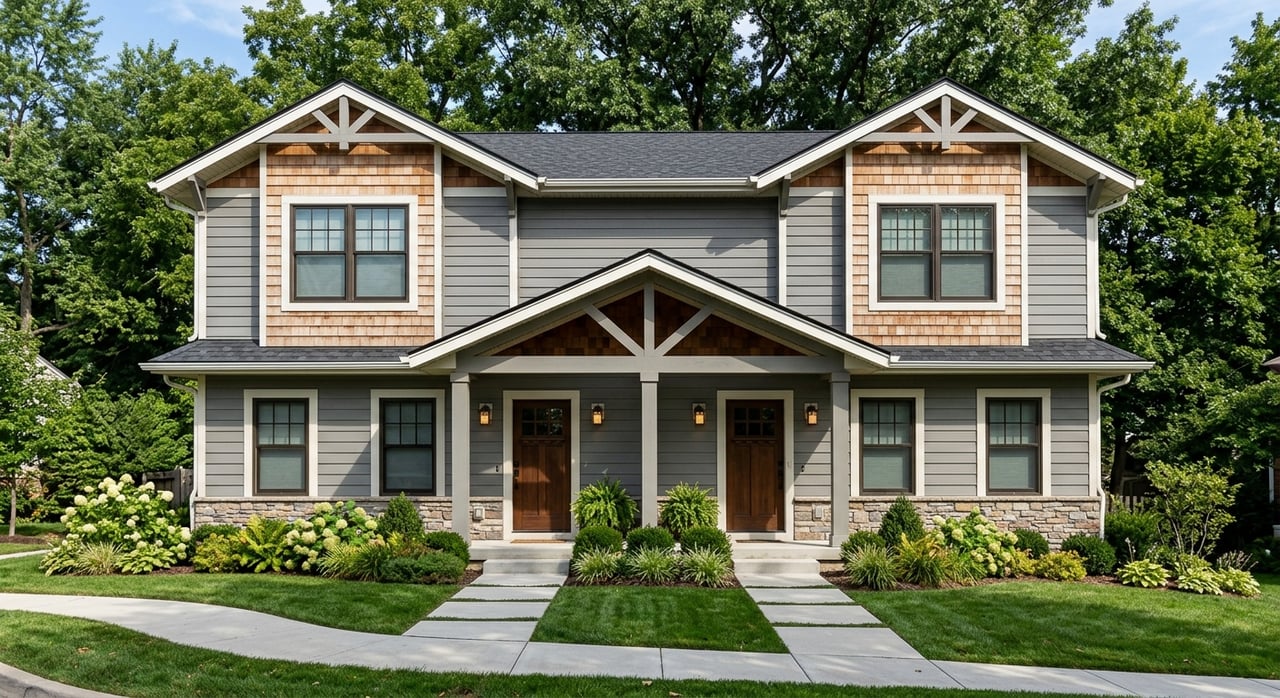
Thinking about buying a duplex in Duluth? You are not alone. For many buyers, a duplex can be a smart way to live in one unit, offset part of your housing cost, or build long-term income in a city with tight rental supply. If you want to understand how the Duluth market works, what financing may look like, and which local rules can affect your decision, this guide will walk you through the big picture and the details that matter most. Let’s dive in.
Why Duluth duplexes get attention
Duluth has a relatively small but active duplex and small multifamily market. Recent market snapshots show 34 multi-family homes and duplexes for sale in the city, with examples ranging from about $209,900 to $675,000. Many listings are clustered in the mid-$200,000s to mid-$300,000s, which puts them in the same general range as Duluth’s 2024 median sale price of $295,000.
That matters because a duplex is not always priced far outside what some buyers are already considering for a single-family home. If you plan to occupy one unit, the numbers may work better than you expect. In the right situation, rental income from the second unit can help support your monthly budget.
Rental demand in Duluth is strong
One reason duplexes stand out in Duluth is the local rental market. In the city’s 2024 Housing Indicator Report, renter households made up 39.4% of all households, and active rental licenses totaled 17,633 units. The market-rate vacancy rate for stabilized properties was just 1.8%.
That is a tight market by any practical standard. Duluth’s 2025 housing update also reported strong demand for moderately priced rental and ownership housing, with about 8,700 additional housing units needed over the next 10 years. It also noted that 53% of renters are cost-burdened, which points to ongoing pressure in the housing market.
For you as a buyer, this can be encouraging and cautionary at the same time. Strong demand can support leasing, but it does not automatically mean every duplex is a great deal at every price. You still need to study rent potential, condition, and carrying costs carefully.
Where neighborhood economics can change
Not every part of Duluth performs the same way. The city’s housing needs analysis found meaningful differences in average rents across surveyed market-rate neighborhoods. Average rents ranged from $1,203 in East Hillside to $1,998 in Kenwood/Chester Park/Woodland.
Other areas in the report included Denfeld/West End at $1,795, Duluth Heights/Piedmont Heights at $1,649, and Downtown/Central Hillside at $1,332. These differences can shape your buying strategy. A higher-rent area may offer stronger income potential, while a lower-rent area may offer a lower entry price.
That tradeoff is worth thinking through before you start touring properties. A duplex that looks cheaper upfront may not perform as well over time if rents are lower and repairs are high. On the other hand, a more expensive property in a stronger-rent area may still require careful budgeting to make the numbers work.
Student demand supports smaller rentals
Duluth’s student population is another factor. Combined enrollment at the University of Minnesota Duluth, the College of St. Scholastica, and Lake Superior College totaled 17,790 in the 2024 Housing Indicator Report. That helps explain why rentals near campuses and bus corridors can lease quickly.
The housing needs analysis also found that smaller rental properties with 10 or fewer units had a 2.1% vacancy rate and an average rent of $1,834. The report noted that these smaller properties are especially popular with students. If the duplex you are considering is in an area with steady student demand, that can affect leasing pace and tenant turnover patterns.
Older duplexes can offer upside and risk
Many Duluth duplexes are older properties, and that can be both the opportunity and the challenge. The housing needs analysis notes that many pre-1940 rental properties have smaller unit sizes. It also found that the newest properties in the survey rented for an average that was 49% higher than older properties.
That does not mean every older duplex is a problem. It does mean you should look closely at condition, layout, and update history. In many cases, a renovated duplex may perform better than a plain older property, but only if the renovation costs and ongoing maintenance are realistic.
This is especially important in Duluth, where heating systems, roofs, plumbing, insulation, and utility costs can change the math fast. A property that looks promising online can become a capital-heavy project if major systems are near the end of their life. Going in with a clear repair budget can protect you from unpleasant surprises.
How financing may work
If you want to live in one unit, a duplex can open the door to financing options that are often more flexible than many buyers expect. Owner-occupant financing is one reason duplexes appeal to first-time buyers and small-scale investors.
FHA financing is often the easiest low-down-payment route for an owner-occupant. FHA loans can allow down payments as low as 3.5% on one- to four-unit properties, though mortgage insurance is required. That can make entry easier, but you still need to plan for the full monthly payment and upfront costs.
VA-backed purchase loans can also be attractive for eligible veterans. VA materials say no down payment may be available if the sales price does not exceed the appraised value, and these loans can be used for a multi-family property of up to four units when the veteran occupies one unit.
Conventional financing is another option. Some conventional loans can require as little as 3% down, but borrowers with less than 20% down typically pay mortgage insurance. For a two- to four-unit principal residence, Fannie Mae says a six-month reserve requirement applies, and rental income from the additional unit may be used in qualifying when you occupy one unit.
Budget beyond the down payment
The down payment is only part of the story. Your actual cash to close will depend on the price, loan type, down payment, and location. You should also plan for closing costs, repairs, moving costs, furniture, and immediate improvements.
This is one reason some Duluth duplexes work best as a house hack or value-add play rather than a pure cash-flow purchase at the seller’s asking price. With listing prices often in the mid-$200,000s to mid-$300,000s and rents varying by neighborhood, the best opportunities usually come from careful analysis, not assumptions.
Duluth rules every duplex buyer should know
Buying the property is one step. Renting it legally is another. In Duluth, a rental license is required before renting a unit.
City materials say an initial inspection is scheduled after the application is verified, and the license is issued only after the property meets minimum housing code requirements. The city also states that an expired license, even for one day, is treated as an unlicensed rental. If the property changes hands, transferring a rental license after a sale requires a transfer application and a $100 fee.
That means license status should be part of your due diligence from the start. Do not assume the seller’s setup automatically carries over without action. Before you write an offer, it is wise to confirm what is licensed now, what transfers, and whether any inspection issues are outstanding.
Conversions and property changes need review
If you are buying a property because you hope to add a unit or reconfigure space, make sure you understand the local process first. Duluth’s duplex conversion guidance says adding a dwelling unit can trigger construction, planning, and life-safety review. It may also involve a capacity availability fee and possible off-street parking requirements.
That can affect both cost and timeline. If your plan depends on converting a single-family home into a duplex, or changing the current setup, you will want answers before you commit. A property only works as an investment if the intended use is actually allowed and financially sensible.
Minnesota landlord duties matter from day one
Owning a duplex in Duluth also means understanding Minnesota landlord responsibilities. According to the Minnesota Attorney General, landlords must keep units in reasonable repair, exterminate pests, and provide at least 68°F heat from October 1 through April 30. The Attorney General also says landlords generally must give at least 24 hours’ notice before entry for a reasonable business purpose between 8 a.m. and 8 p.m., unless the tenant agrees otherwise.
Security deposits have specific rules too. The Attorney General says landlords must return the deposit plus 1% interest within 21 days after the tenancy ends. Deductions are limited to unpaid rent, damage beyond ordinary wear and tear, or other money the tenant owes under the lease, and any withholding must come with a written explanation.
These are not small details. They affect how you budget, how you manage the property, and how you handle tenant communication. If you are buying your first duplex, it helps to think of compliance and maintenance as part of the investment from the very beginning.
A practical Duluth duplex checklist
Before you make an offer, focus on the items most likely to affect whether the property feels stable or stressful.
- Verify the rental license status.
- Ask whether any inspection items are open or pending.
- Inspect the heating system, roof, plumbing, and parking situation.
- Review current rents, lease terms, and utility arrangements.
- Ask your lender how rental income will be treated in qualifying.
- Confirm reserve requirements and whether mortgage insurance will apply.
- Budget for repairs, maintenance, and short-term surprises after closing.
This checklist is simple, but it covers the issues most likely to change your real monthly cost. In Duluth, a duplex can be a strong move when the property, financing, and local compliance all line up.
Is buying a duplex in Duluth worth it?
For the right buyer, yes. A duplex can offer a path to owner-occupied housing with income potential, or a small rental property in a city where vacancy is low and housing demand remains strong. But success usually comes from buying with a clear plan, realistic numbers, and a close eye on condition and licensing.
If you want to live in one unit, reduce your housing cost, and build equity over time, a duplex may be worth serious consideration. If you are buying strictly for immediate cash flow, you may need to be more selective and patient. In either case, local market knowledge makes a difference when you are comparing neighborhoods, property condition, and rent potential.
If you are thinking about buying a duplex in Duluth, working with a local agent who understands neighborhood patterns, smaller multi-family properties, and the details that can affect your numbers can make the process a lot less stressful. When you are ready to talk through your options, connect with Michelle Ryan for practical, local guidance.
FAQs
What should you know before buying a duplex in Duluth, MN?
- You should understand local rent levels, property condition, financing options, rental license requirements, and likely repair costs before making an offer.
How much do duplexes cost in Duluth, MN?
- Recent listings showed Duluth multi-family homes and duplexes ranging from about $209,900 to $675,000, with many in the mid-$200,000s to mid-$300,000s.
Can you use FHA financing to buy a duplex in Duluth, MN?
- Yes, FHA financing can be used on one- to four-unit properties for owner-occupants, with down payments as low as 3.5% and required mortgage insurance.
Does a Duluth duplex need a rental license?
- Yes, Duluth requires a rental license before renting, and the property must meet minimum housing code requirements before the license is issued.
Which Duluth neighborhoods show stronger rent potential for duplexes?
- Based on the city’s housing analysis, surveyed areas with higher average rents included Kenwood/Chester Park/Woodland, Denfeld/West End, and Duluth Heights/Piedmont Heights.
What repairs matter most when buying an older duplex in Duluth?
- Heating systems, roofs, plumbing, parking, and general maintenance history are especially important because they can quickly change your true cost of ownership.