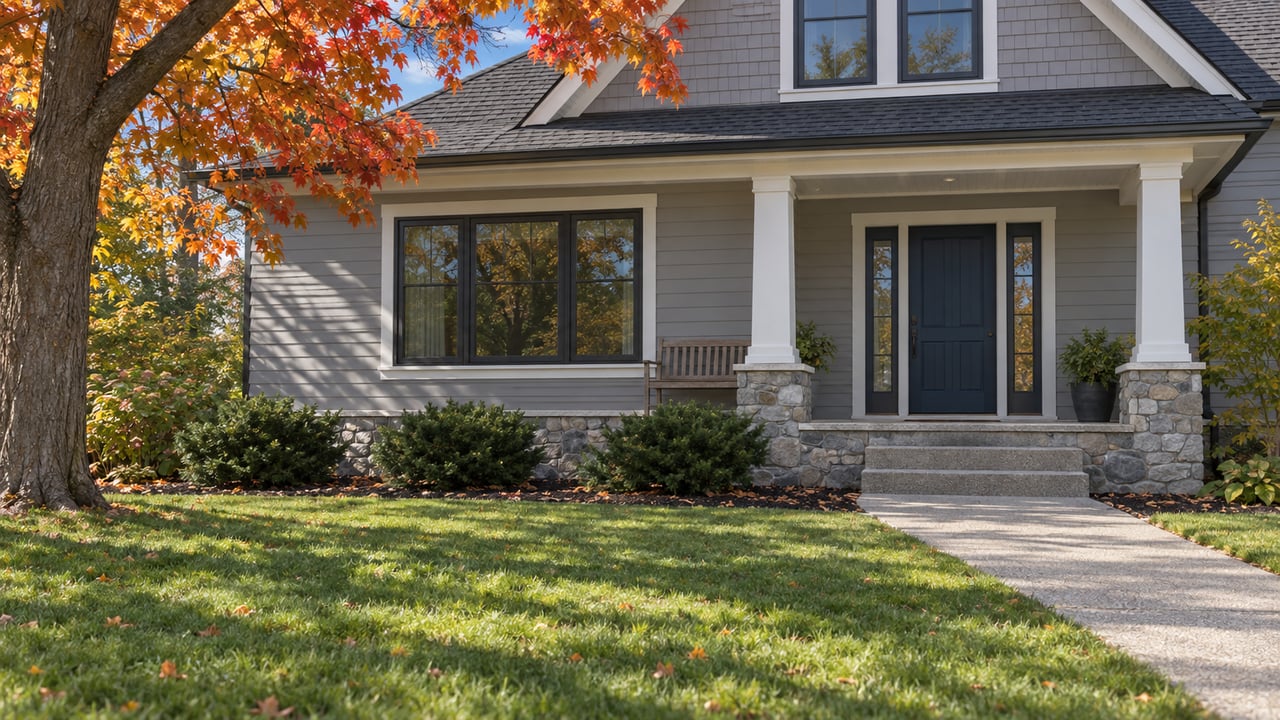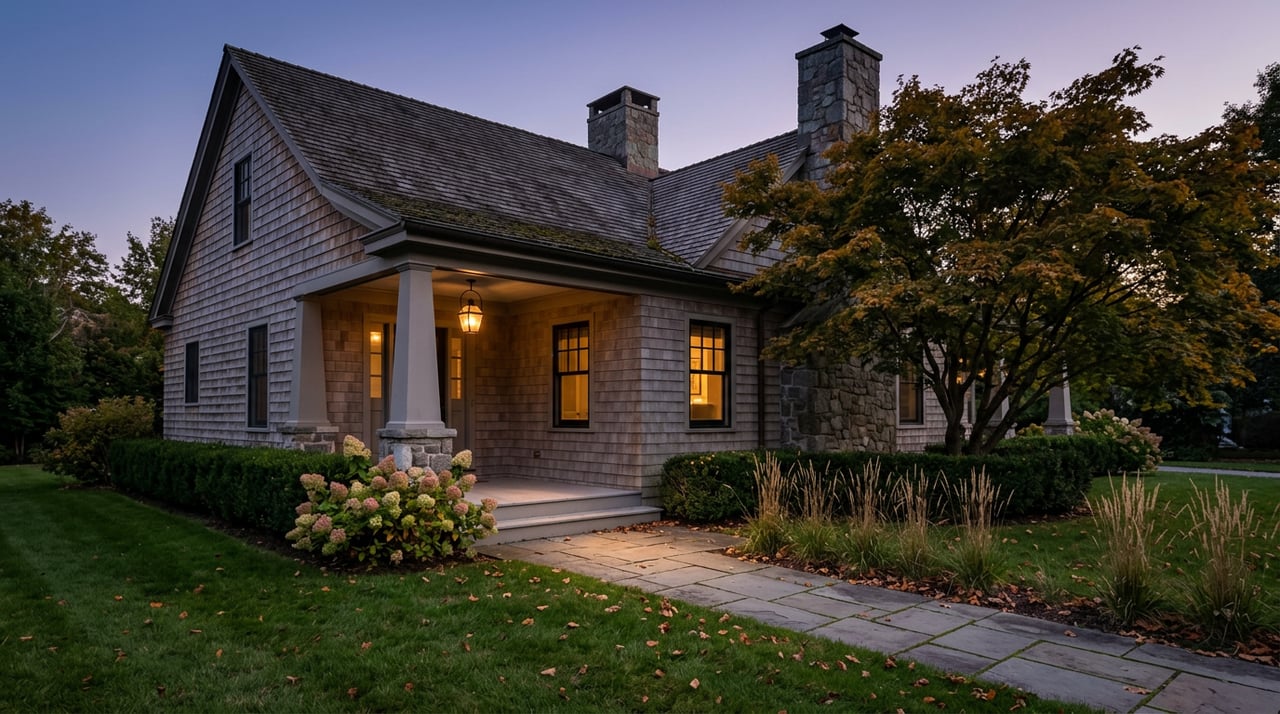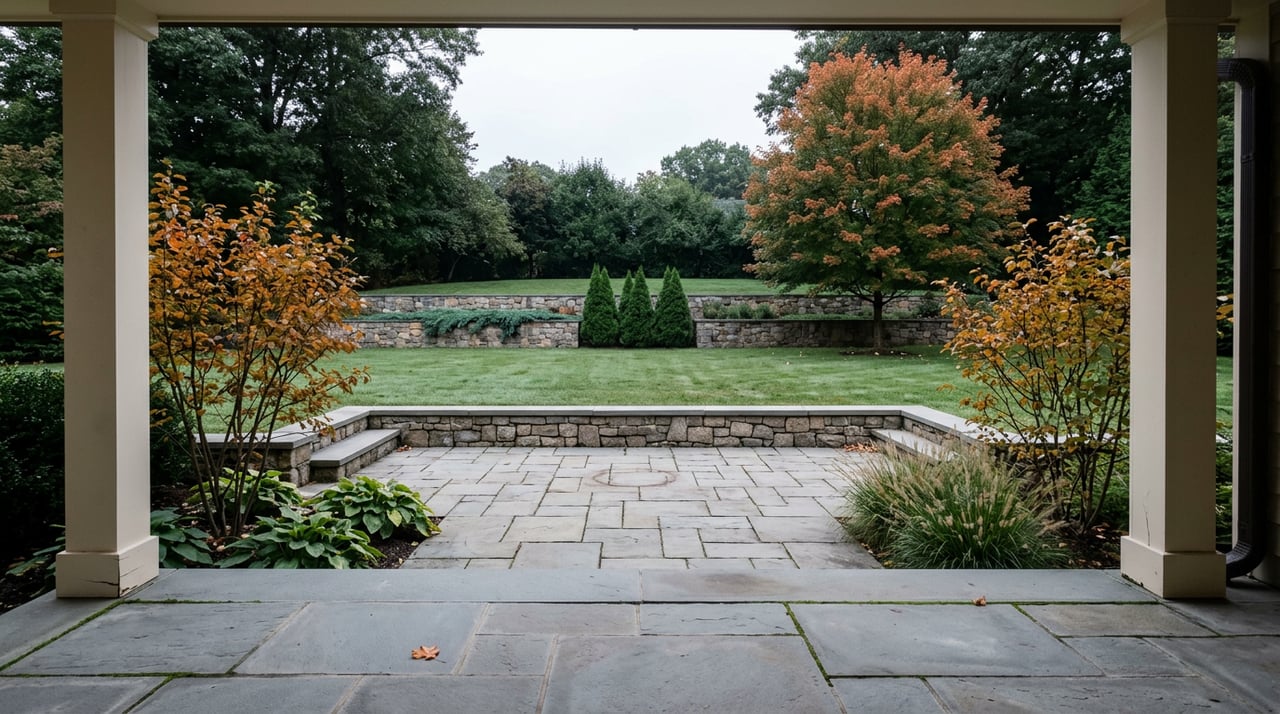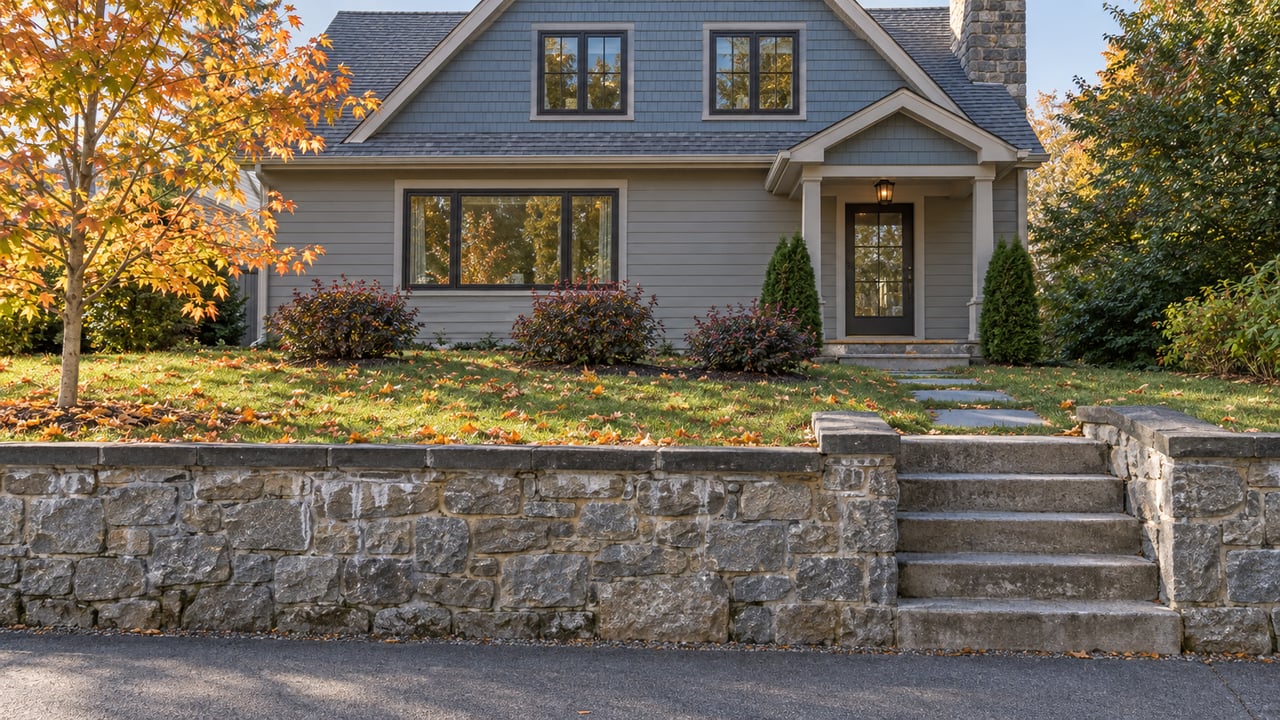
Why does a home in Piedmont Heights, built into the same ridge as a home in Congdon Park, with a comparable slice of Lake Superior filling the window, routinely close for tens of thousands of dollars less?
Both neighborhoods sit along the flank of Skyline Parkway. Both trade on the same postcard: water below, sky above, a view that real estate listings never get tired of describing. If elevation and lake exposure set the price in Duluth's hillside neighborhoods, Piedmont Heights and Congdon Park should track each other. They don't. Zillow's active-listing averages for homes tagged with a Lake Superior view put Congdon Park around $437,000 to $458,000, while comparable listings in Piedmont Heights average closer to $279,000 to $286,000. That's not a rounding difference. It's two different markets wearing the same view.
The city's own paperwork explains more of that gap than any listing description does.
The View Isn't the Variable
Duluth's hillside was platted in waves, and the waves didn't all build the same way. Congdon Park's upper streets and the newer construction scattered through Piedmont Heights tend to sit on lots that were engineered for the slope from the start, with foundations, drainage, and retaining structures designed together as one project. A lot near Piedmont Heights was recently marketed as sitting at the same elevation as Enger Tower, with nearly a 360-degree view of the lake, the Lift Bridge, and the harbor. That's a genuine hillside premium, and it shows up in the price of a handful of newer builds and estate lots scattered through the neighborhood.
But most of Piedmont Heights, and most of Central Hillside and East Hillside below it, isn't new construction. It's a century of houses built into a slope in stages, one owner's retaining wall butted up against the next owner's driveway cut, repaired piecemeal as budgets allowed. East Hillside's median listing price sits around $289,000 as of late September 2026. Rural Duluth, which carries none of the hillside's engineering complications, posted a median sale price of $313,000 over the three months ending in May 2026, actually down 1.3 percent year over year. A flatter lot outside the city core is currently pricing higher than a hillside lot inside it. The view isn't buying what the listing photos suggest it's buying.
The Permit That Splits the Hillside
Here's the mechanism the portals don't show you. In Duluth, a retaining wall over four feet, measured from the bottom of the footing to the top of the wall, needs a building permit and a design stamped by a structural engineer licensed in Minnesota. That threshold isn't the only trigger. The city also requires a permit for any retaining wall, regardless of height, that is supporting a surcharge, which is code for a wall holding up a driveway or a structure above it.
On a flat lot, that rule rarely comes up. On a hillside lot, it comes up constantly, because a hillside lot is often a series of small retaining walls stacked to create a level yard, a driveway pad, and a walkable path to the front door. A wall built decades ago without a permit doesn't disappear when the property changes hands. It shows up at inspection, and it shows up again if the current owner ever wants to add a garage, extend a driveway, or terrace a yard, because any new surcharge wall triggers the engineering requirement no matter how short it is.
This is where the price gap actually lives. A newer Congdon Park build with engineered retaining from day one carries none of this exposure. An older Piedmont Heights or Central Hillside property, built before the current code and repaired informally over the years, carries a retaining structure of unknown provenance, and buyers and appraisers both price that uncertainty in. It's not the view that separates these neighborhoods. It's what's holding the dirt up underneath it.
The Alley Nobody Photographs
There's a second hillside-specific detail that never makes it into a listing description: how the garage gets plowed out.
Duluth ranks its streets into three snow priorities. Priority 1 covers main arterials and is supposed to be passable within 36 hours after a snowfall ends. Priority 2 covers residential streets, cleared within 48 hours. Priority 3 covers alleys.
Alleys are considered the last priority and will be plowed once P1s and P2s have been serviced.
The city's own policy adds that alleys are opened and made passable within 56 hours after a snowfall subsides, nearly two and a half days behind the main roads. In flatter parts of Duluth, that mostly means a slower morning. In the older hillside blocks, where narrow lots were platted with the garage fed from the alley behind the house rather than the street in front, it means the difference between a plowed driveway and a snowbound one for over two days at a stretch, on a lot that's already steep enough to make foot traffic to a cleared street its own small project.
None of this shows up in a walkthrough on a dry September afternoon. It shows up the first heavy snowfall after closing, when a buyer discovers whether their garage answers to Priority 2 or Priority 3.
Why the Neighborhood Median Can't Be Trusted Either
The hillside's price data has a second problem layered on top of the retaining wall and alley issues: there isn't much of it.
Recent sales tracking for Congdon Park showed roughly eight homes sold in a recent period, averaging $509,875, a drop of nearly $98,700 from the previous stretch. Eight sales is not a market. It's a small sample where one heavily renovated estate or one fixer-upper with deferred retaining wall repairs can swing the average by six figures. Duluth Heights tells a version of the same story from the other direction. Its median sale price jumped 28.3 percent year over year to $450,000 over the three months ending in May 2026, on a total of just 19 homes sold that month, down from 24 the year before. A double-digit swing on fewer than twenty transactions is a headline, but it isn't a forecast.
Compare that to the city as a whole, where the median sale price sat at $307,000 over the three months ending in June 2026, up a steadier 2.3 percent year over year, on 294 homes sold that June alone. The citywide number moves in normal, boring increments because it's built on enough transactions to smooth out any single outlier sale. The hillside neighborhood numbers move in double-digit swings because they aren't. Anyone comparing Congdon Park to Piedmont Heights to Duluth Heights on median price alone is comparing three thin, noisy samples and calling the noise a trend.
What This Means If You're Comparing Hillside Blocks
None of this means a hillside home is a worse purchase than a flat one. It means the comparison has to happen at a level the portals don't show. Before treating a hillside listing's price as a fair read against its neighbor a few blocks over, it's worth asking:
- Is there a permit on file for any retaining wall over four feet, or any wall holding up the driveway or garage pad?
- Does the garage face the street, or does it face an alley that the city plows last?
- How many comparable sales actually back up the "neighborhood median" being quoted, and over what window?
- Has the retaining structure been inspected recently, or is its condition being taken on faith from a prior owner's word?
These are ordinary questions with straightforward answers, and getting them answered before an offer is written is a lot cheaper than discovering them after.
FAQ
Does every hillside home in Duluth have a retaining wall? Not every one, but it's common enough on the terraced blocks of Central Hillside, East Hillside, and Piedmont Heights that it's worth checking rather than assuming either way.
Is the four-foot permit rule only for new construction? No. It applies any time a wall over four feet is built or rebuilt, and separately, any wall of any height that supports a driveway or structure needs a permit regardless of how tall it is.
Why would a flat lot outside the city core price higher than a hillside lot inside it? Rural Duluth's median sale price over the three months ending in May 2026 was $313,000, ahead of several hillside neighborhoods with lake views, because the flat lot carries none of the retaining wall or alley-access questions that come standard with a slope.
If you're weighing a hillside address against a flatter one, or trying to make sense of why two homes with the same view carry two different price tags, Michelle Ryan can walk the specific block with you, pull the permit history, and tell you what you're actually buying before you write the offer.